From escaping the metropolitan madness to lining up for flight boardings, bathrooms, customs, and TSA checks at the airport – flying into Juan Santamaria International Airport in San Jose, Costa Rica from Washington, DC is a waiting game.
My first encounter with customs caught me off guard—not just because of the cautionary signs warning tourists that taking seashells from the beach is illegal and considered a serious crime, but also because of the agent himself. His curious questions and particular interest in my travel plans made me wonder if he was flirting. Then, in an instant, the reality of his role hit me. I scrambled to find my student ID, eager to prove that I was simply a student studying abroad in Costa Rica—and nothing more. For most studying and traveling abroad is quite the transition requiring flexibility and the gift of deciphering social cues – quickly, and especially at customs.
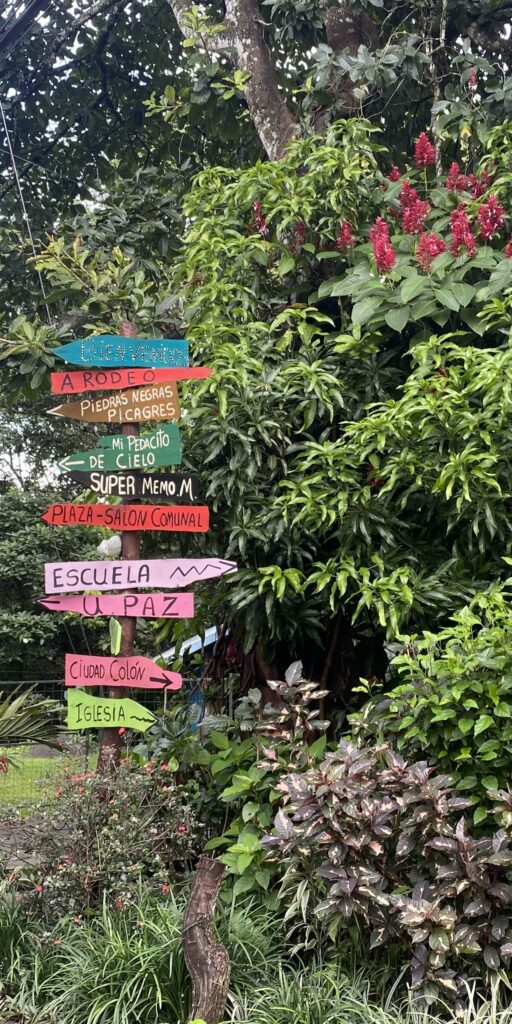
After surviving customs, I was relieved to hop in a taxi, ride away from the city of San Jose and into the quiet town of Ciudad Colon where The UN-Mandated University for Peace campus is located.
On the UPeace Shuttle headed to campus for the first time, I knew I was in for a unique experience when I lost Wi-Fi connectivity while the other students and I were transported through a lush natural landscape.
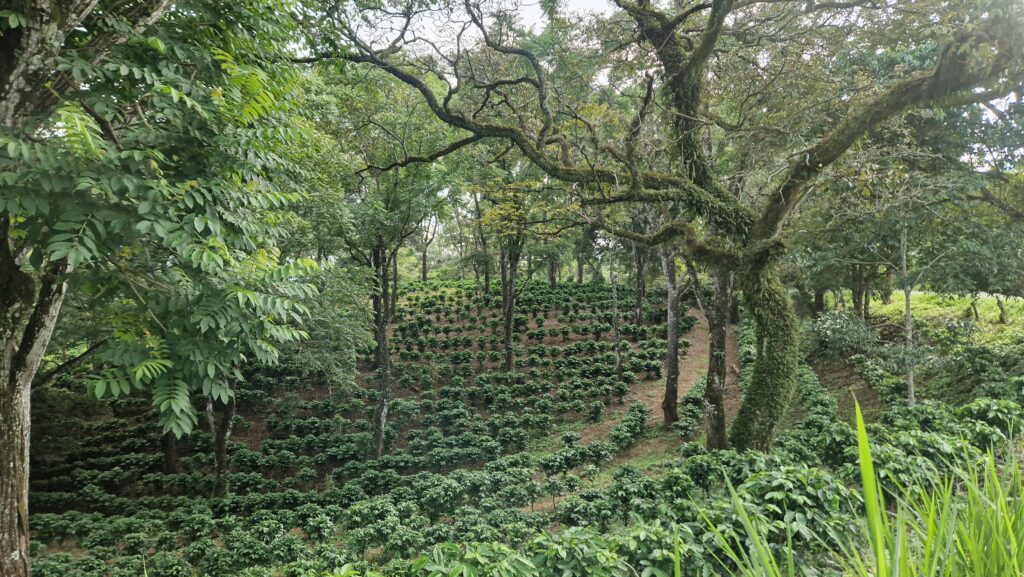
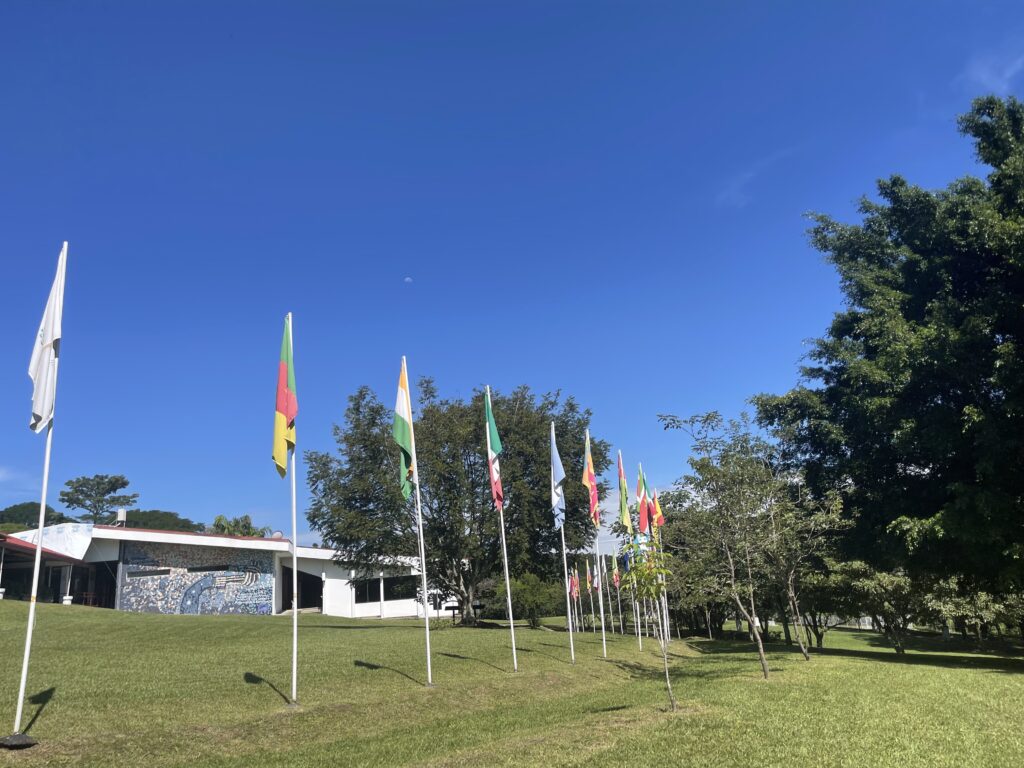
Through green mountainous and hilly roads, the scent of acres and acres of coffee farms flooded my senses and when we arrived on-campus, I was simply stunned by the vivid greenery, bright blue sky, colorful free-flowing peace flags, and of course, the wildlife.
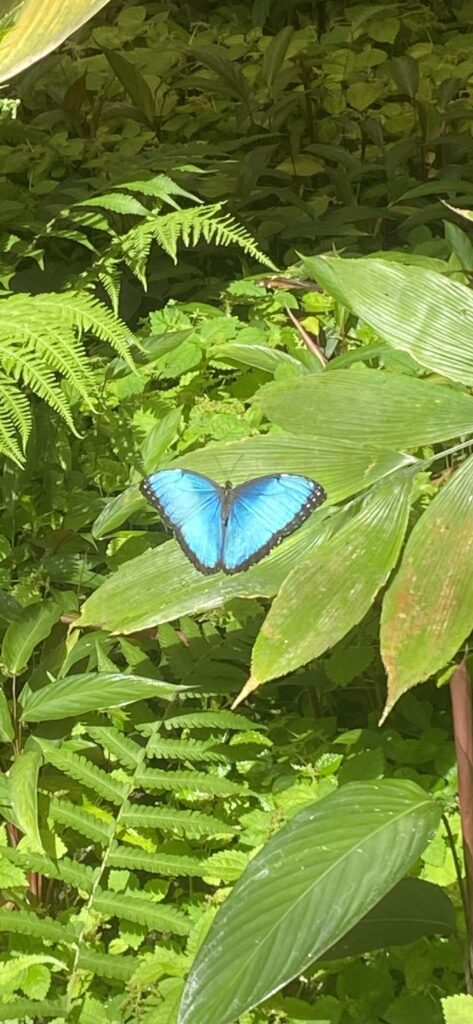
Greeted by university pups, butterflies, toucans, and monkeys – the tropical air, deep florals and warmth of the sun created a serene and tranquil environment. The Universidad Para La Paz measures up to their commitment of bringing peace forward in every way, and here, my learning experiences feel alive and deeply connected with the natural world.
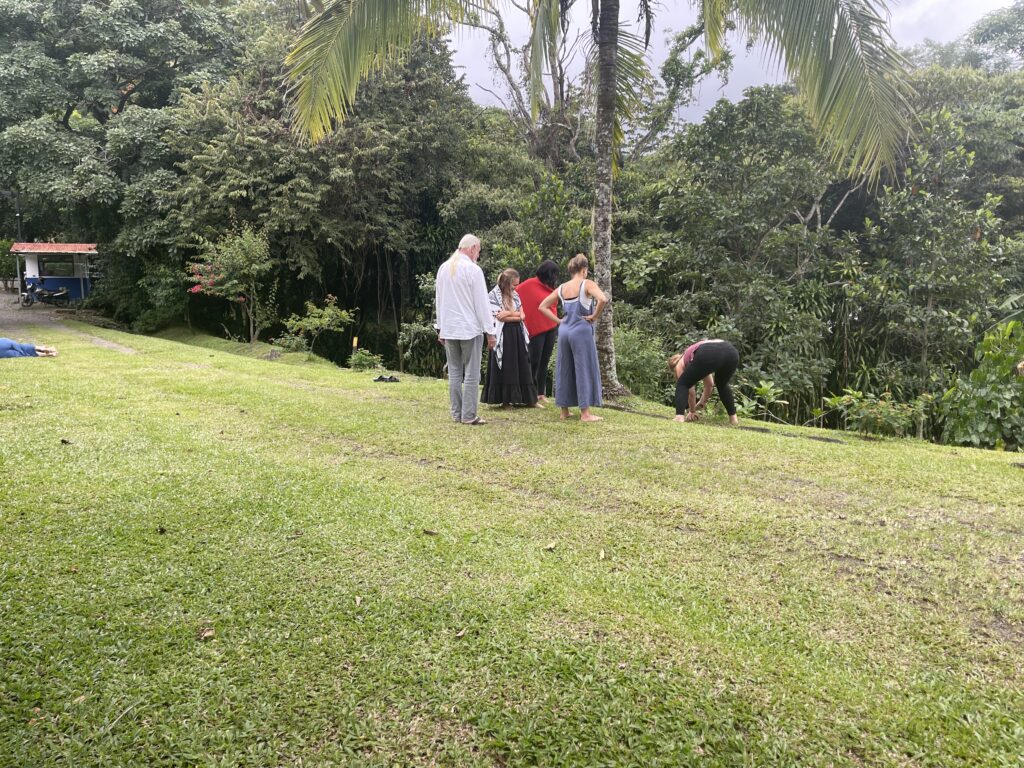
During complex lectures and class discussions, the comforting rain soothes us and in lighter moments my classmates and I engage in group work outdoors where we are often uplifted by the sight of horses and other animals passing through campus. UPeace is a paradise where I reflect on my relationship with our shared living natural world and the environmental elements teaching us with cycles of learning mimicking the landscape.
Environment plays an essential role in one’s learning process and academic performance. For example, growing up in a fast-paced urban environment, I often navigated distractions specific to city life such as studying through loud noises, stressing or rushing to class over traffic, and feeling unheard in overcrowded learning spaces where time and resources are often limited.
There were moments in my earlier academic years, where I recall feeling overwhelmed, stressed, and anxious about balancing day-to-day pressures with my academics and studies. However, throughout my current study abroad experience in Costa Rica, learning in a more natural environment has helped me feel more engaged with my academics with more awareness and attunement towards my mental and physical wellbeing – in other words I’m taking a lesson from nature and learning to slow myself down.
Similarly, learning abroad in a nature-based setting encourages me to be even more explorative and investigative with my learning approach. I find myself thinking more critically with curiosity leading me forward and nature as my guide.
Also, I find myself embracing authentic opportunities to collaborate and communicate with my peers in ways that celebrate diversity and cultures from around the world. Gathering outdoors in such a biodiverse sanctuary where wildlife and ecosystems thrive, nature becomes a bridge for cross-cultural communication, dialogue, and relationship-building.
For example, cross cultural communication becomes easier with nature as an “icebreaker” – when another American student and I first stood over a pile of coconuts that had dropped from a nearby tree, clueless about what to do next, it sparked a spontaneous global exchange. Students from different countries joined in, eager to share how coconuts played a role in their own climates and demonstrated their favorite ways of cracking open a coconut.
In minutes, our curiosity turned into a playful, multicultural lesson—full of laughter, tips for cracking shells, and stories of how a simple coconut could be turned into so much more. Our professor encouraged the moment by acknowledging that this too is a part of the learning process, and I became aware that I was learning and building cross-cultural connections in nature’s living classroom.
Thinking of Studying Abroad? My Advice: Go For It!
If visiting Costa Rica or any other foreign country, I ask that you avoid taking away any actual pearls, seashells, rocks or other beach items because again, it is a very serious and punishable crime.
But you can take my pearls of wisdom with you:
- Slow down and connect with the environment abroad by asking yourself what you see, hear, smell, taste, and touch – let your sensory experiences guide your learning across cultures.
- Take advantage of every opportunity to learn and practice a foreign language while it’s free.
- Keep a journal to document your experiences and lessons learned.
I’m looking forward to sharing more experiences with Ariventures Abroad.