
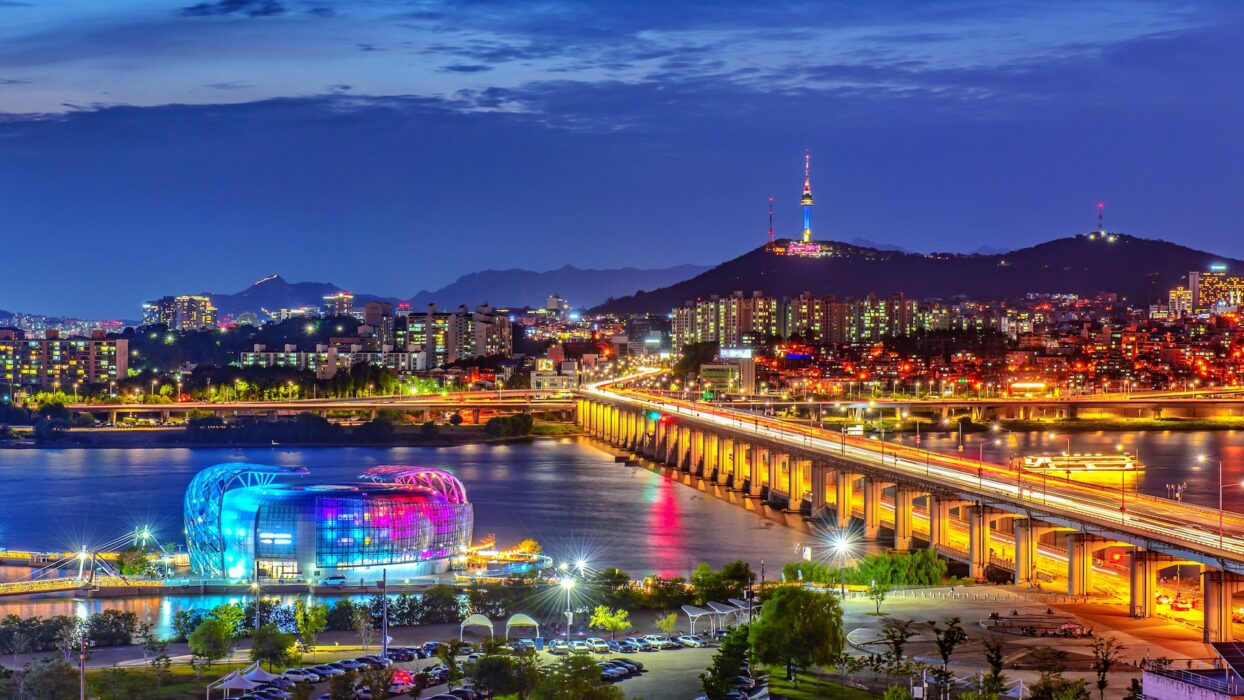
Seoul is a city that never stops evolving. Ancient palaces rise beside glittering skyscrapers, while K-pop beats mingle with the aroma of sizzling street food. This Seoul travel guide highlights the best of Korea’s capital — showing you where to go, what to eat, and how to experience both the old and the new.
Must-See Highlights
Bukchon Hanok Village and the Palaces
Begin your journey with Seoul’s history. Between Gyeongbokgung and Changdeokgung Palaces lies Bukchon Hanok Village, a living museum of Joseon-era architecture. Wandering its narrow alleys reveals traditional wooden homes, cozy tea houses, and sweeping city views. The palaces themselves remain breathtaking tributes to Korea’s royal past.
Seoul’s Food and Market Scene
No Seoul travel guide would be complete without food. From the bustling stalls of Gwangjang Market to the neon-lit streets of Myeongdong, flavors abound. Try tteokbokki (spicy rice cakes), hotteok (sweet pancakes), or fresh seafood at Noryangjin Fish Market. Each bite captures the energy of the city.
Modern Design and Art
Step into the future at Dongdaemun Design Plaza, where architecture meets creativity. Inside COEX Mall, the Starfield Library creates a spectacular backdrop for book lovers. For panoramic views, visit Lotte World Tower’s Seoul Sky. Art enthusiasts should not miss Seongsu-dong, home to galleries, design spaces, and pop-ups.
Parks and Green Spaces
Despite its bustling pace, Seoul offers plenty of nature. Haneul Park dazzles with sunsets, while the Seoul Trail invites hikers to explore lush landscapes. At Namsangol Hanok Village, cultural immersion blends seamlessly with tranquil gardens.
Neighborhoods to Explore
Each district in Seoul has its own story. Hongdae thrives on nightlife and indie culture, Insadong charms with teahouses and crafts, while Gangnam and Seongsu-dong deliver modern sophistication through upscale shopping and stylish cafés.
Hidden Gems of Seoul
If you want to peel back the layers of the city, these lesser-known spots reveal quieter corners and authentic character.
Local-Loved Corners & Neighborhoods
- Changsin-dong, Jongno-gu: A raw, creative enclave with sewing workshops, artisans, and vintage shops.
- Mangwon-dong: A local favorite with a traditional market, cozy cafés, and an inviting, slower pace.
- Seongsu-dong: Known as the “Brooklyn of Seoul,” with warehouse cafés, boutiques, and art studios.
- Euljiro (“Hipjiro”): Industrial grit meets hidden bars and cafés, perfect for those who love retro charm.
Scenic Views, Quiet Walks & Alternative Spots
- Eungbongsan: A modest hill offering one of the city’s best sunsets over the Han River.
- Eunpyeong Hanok Village: A peaceful hanok district nestled against mountains and temples.
- Ihwa Mural Village: Colorful street art, winding alleys, and photo-worthy staircases above Naksan Park.
Food & Everyday Culture
- Basement Samgyupsal near Hapjeong Station: A humble yet beloved grilled pork belly spot hidden underground.
- Dongmyo Flea Market: A treasure trove of vintage goods and second-hand finds, brimming with local character.
Practical Tips for Visiting Seoul
Getting Around
Seoul’s subway system is efficient and budget-friendly. Buy a T-Money card for seamless use across buses, subways, and taxis. For navigation, local apps like Naver Maps or Kakao Map outperform global platforms.
Save on Attractions
Discount passes such as the Seoul Discovery Card grant access to top attractions and local deals — perfect if you plan to explore multiple sites.
Budget-Friendly Choices
Many experiences are affordable or free. The National Museum of Korea and the National Folk Museum often offer free admission, while Han River parks and traditional markets provide authentic fun without overspending.
What to Know Before You Go
Keep some cash handy for smaller vendors. Plan around the seasons: spring and autumn bring the best weather, summer is hot and lively, while winter is festive but cold. A portable WiFi device or SIM card ensures smooth navigation and translation.
When to Visit and How Long to Stay
The best time to visit Seoul is in spring or autumn, when cherry blossoms and fall foliage transform the city. Summer offers festivals but high humidity, while winter charms with snow and holiday spirit.
Spend at least four to five days to see Seoul’s main highlights, but allow a full week to dive into neighborhoods, day trips, and hidden gems that showcase the city’s layered identity.
Final Thoughts
Seoul blends tradition and innovation into one dynamic experience. Whether you are savoring street food, exploring royal palaces, or sipping coffee in a design-forward café, every moment tells a story. This Seoul travel guide is designed to help you uncover the city’s essence — so you return home not just with photos, but with memories of Korea’s vibrant capital.
