
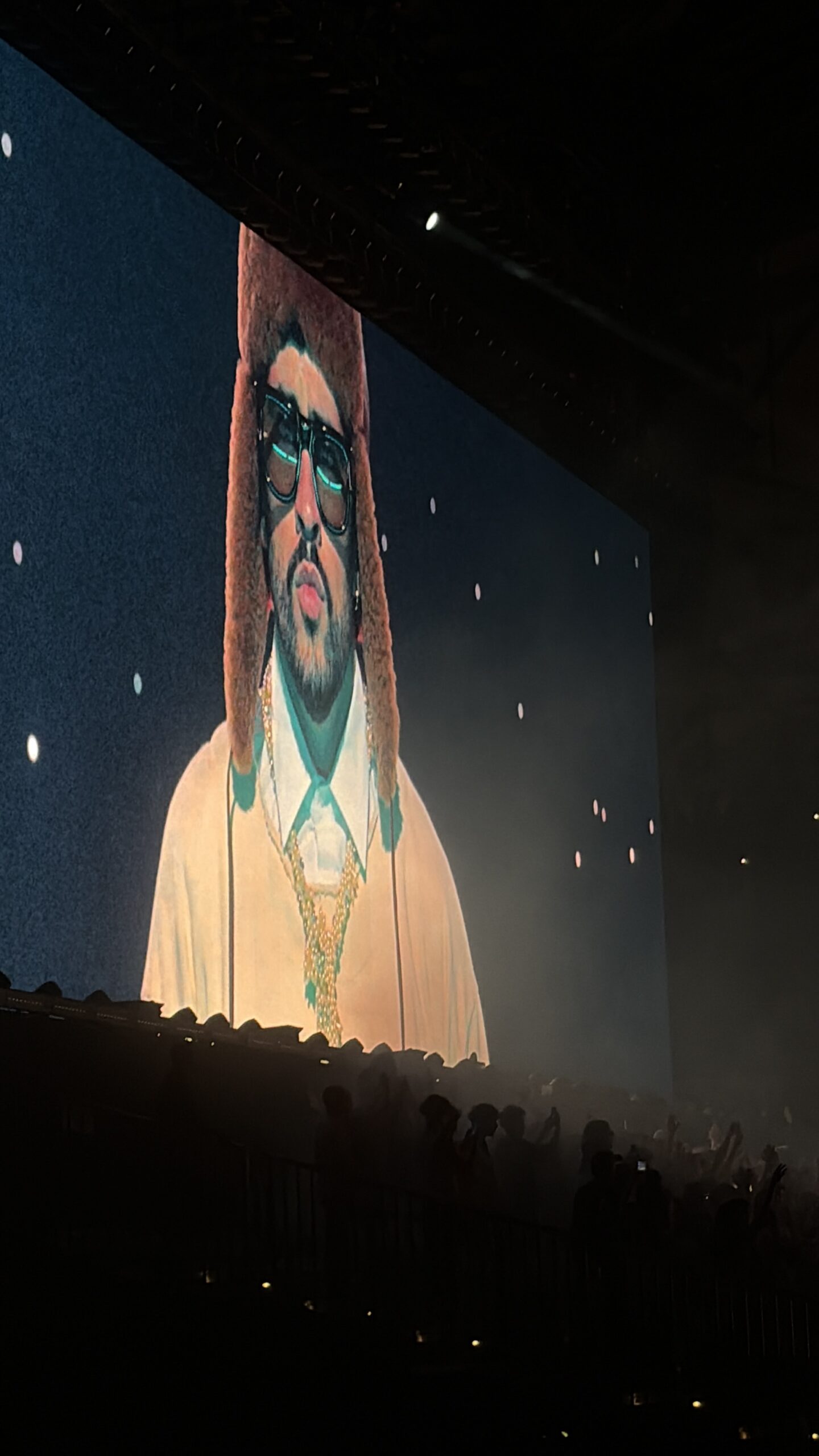
One of the best travel strategies we know fits in a single sentence: see your favorite artist in another country. We have been preaching it for years, and on July 1 we practiced it, standing in the Orange Vélodrome in Marseille while Bad Bunny turned a stadium of sixty thousand strangers into one very loud family. Welcome to Concert Passport, a new series about the shows worth crossing an ocean for. We don’t plan trips we haven’t been on, and we certainly don’t recommend concerts we haven’t screamed through. You’ll want to take notes on this one.
The strategy, explained
Here is the logic, and do try to look surprised: tickets for the same global tour often cost less abroad than in the US, sometimes dramatically less once you’ve watched American resale prices do their thing. So the ticket stops being the splurge and becomes the anchor: the one fixed night an entire vacation gets built around. You were going to travel anyway. Now the trip has a headliner.
The show is one night. The destination is the week. That ordering is the entire trick, and most people get it backwards, treating the concert as the trip instead of the excuse for one. Not you, though. Not after today.
The math, with receipts
We would never gossip without proof. Our tickets, close to the stage, cost 130 euros each. Anyone who has priced comparable seats for a stadium tour in the States knows that figure reads like a typo; the same proximity at a US date runs multiples of that before the fees even clear their throat. Flights came in around $600 round trip. The Airbnb, split among the group, brought lodging down to a number nobody had to think twice about.
Add it up and the entire week cost less than what VIP packages alone go for back home. A full travel experience with a world-class concert inside it, instead of a concert with a parking lot around it. We know. Scandalous.
Three hours, no coasting
The show earned the airfare on its own. Bad Bunny performed for three hours straight, roughly 30 songs deep across his catalog, on the Debí Tirar Más Fotos World Tour that has been breaking grosses across two continents. The staging carries his Puerto Rico into every stadium: the tour’s design is built around la casita, a recreation of a traditional Puerto Rican home, and each city gets an exclusive song performed nowhere else on the tour. It plays less like a concert set and more like a place he invites sixty thousand people into.
And the man cares about his fans in a way you can verify with a clock. He stopped for about 20 minutes mid-show to greet people in the crowd. Not a wave on the way to the next song. A real pause, faces met, moments made. Stadium artists do not have to do that. The ones who do are telling you something. We suggest you listen.
The part no US arena can offer
Watching a global artist outside the US is its own experience. The crowd sang in Spanish, cheered in French, and needed no translation for either. The energy ran different, looser and warmer than the arena-show formula we grew up on, and seeing how an artist performs for the world instead of for a hometown market changes how you hear them.
Then the finale: we walked out of the stadium into Marseille. Dinner in the city instead of 40 minutes of taillights. That contrast alone justifies the airfare. Some things are simply done better on this side of the Atlantic.
Until the next stamp
This will not be the last entry in the Concert Passport. The next stamp is already pending: an icon, an ocean away, and no, we’re not telling. Yet. If a tour you love is crossing an ocean this year, look up the international dates before you pay US prices. You might find the trip was hiding inside the ticket all along.
You know you’d travel with us.
Subscribe to Postcards, our biweekly letter from the road.
